

Who I am
I am Eszter Saródy, an integral counsellor and coach, and a relationship facilitator.
I believe that genuine change becomes possible when we bring together the mind, emotions, body and soul.
I support individuals, couples and parents in reconnecting with their inner strength, processing difficult emotions and developing healthier relationships. I offer a safe and supportive space for self-exploration and personal growth through individual sessions, couples work and group programmes.

Individual counselling, mentoring and relationship facilitation.
Deep, personal one-to-one work in a safe and confidential setting.
In person or online
Available in Hungarian, English and French

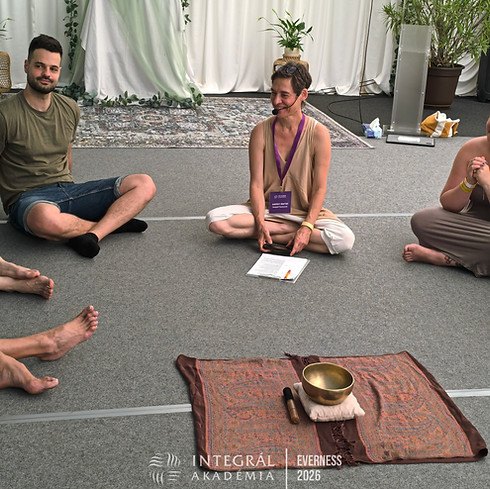
Women’s circles, We-Space practices and body-focused movement groups.
Experience the power of sharing, acceptance and personal growth within a supportive community.

Workshops
Workshops supporting emotional maturation and a deeper understanding of integral psychology.
Available on request for associations, community groups and companies.
What My Clients Say:
Pavla K.
“What I appreciated throughout the whole process—and what I think is a wonderful idea—was the combination of different methods and approaches. There was theory, practical exercises and sharing, and above all, these were brought together with movement and meditation.”
Lara K.
“It was not easy for me to become more practical. It only became possible when someone gave me the space and the tools—things I simply would not have worked through on my own. I would have assumed that I needed to meditate more and raise my vibration even higher.
Vibration is important, but so are planning and taking real, concrete steps forward. :)”
Evka S.
“This community helped me enormously in staying motivated, holding on to the thread and sharing my successes.
I changed internally. During the very first part of the course, I learned much more about myself. I had already been able to identify some of my character traits, but I came to understand my real needs and recognise my abilities. From that point on, I knew what my true motivation for change was.”


